How to Vet End-to-End Ownership in Engineering Interviews
Stop relying on interview claims. Use this 3-signal framework to identify engineers who truly own outcomes, autonomy, and long-term execution.
End-to-end ownership is one of the easiest traits to fake in engineering interviews.
Here’s how to actually vet for it:
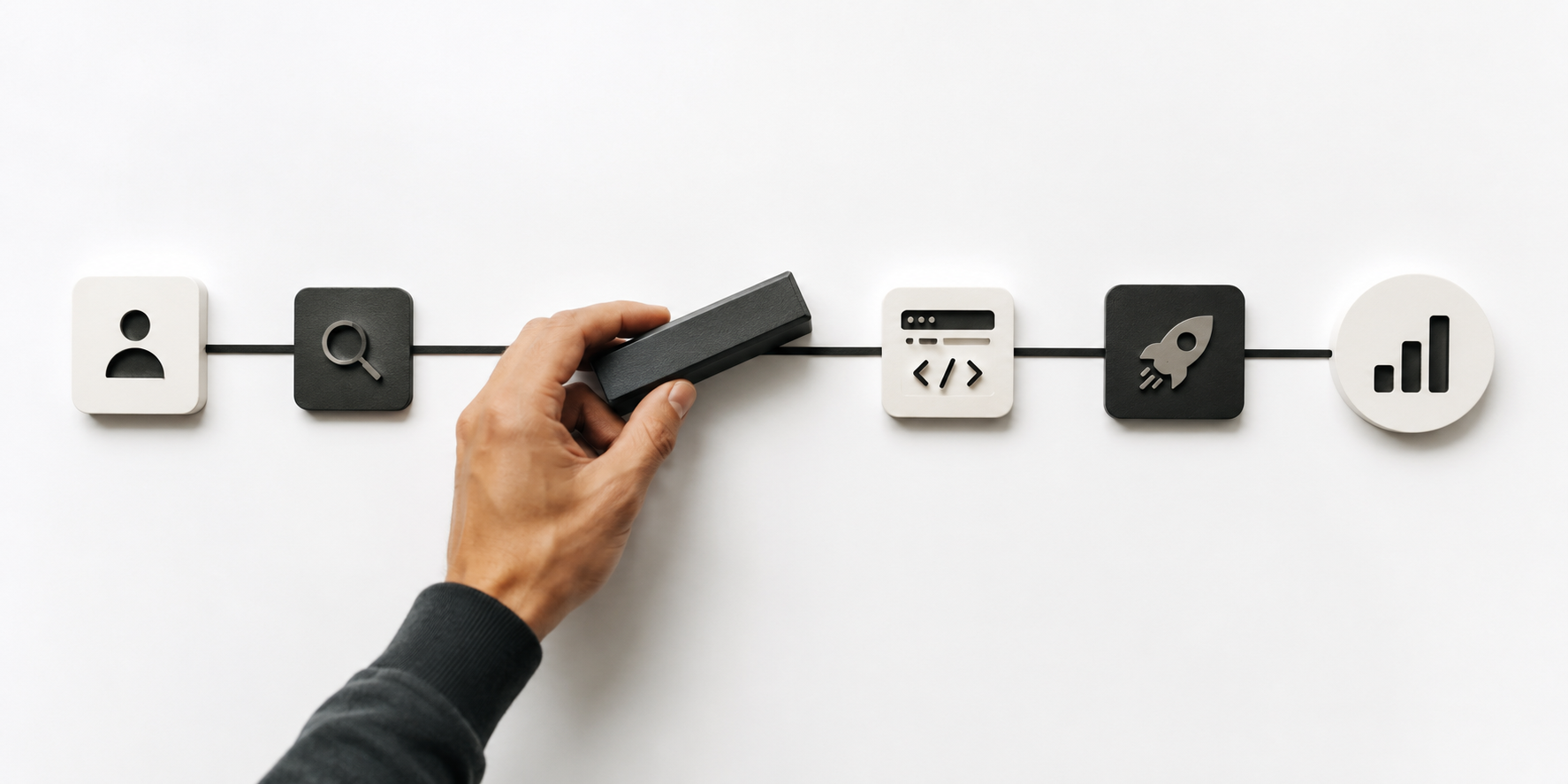
Look for three patterns in their past work.
- Can they connect engineering work to user outcomes and business impact?
- What scope of autonomy can they dominate?
- What time horizon can they sustain?
This is important because most teams don’t really test for ownership before they hire.
A founder told me recently he had tried everything to get his engineers to take more initiative— promotions, bonuses, performance reviews. Some started strong, but they always settled back into waiting to be told what to do.
When I asked how they screen for ownership in hiring, he said: "We don't. We just expect senior engineers to have it. But in culture fit interviews, we ask about the impact their previous work has had on the business."
Anyone can tell you about impact. The question is whether they created it. We kept hearing variations of this. So we built a framework for measuring it.
Here's the 3-signal Framework
The 3-Signal Framework for End-to-End Ownership
Ownership is a pattern. To find it, you need to listen to how candidates describe their work, what level of autonomy they have handled, and how long they have stayed accountable for outcomes.the
Signal 1: Do They Speak in User Outcomes and Business Impact?
Don't ask about impact directly. Anyone can rehearse that answer.
Instead, ask about past work, challenges, and what they're proud of. Then listen to how they frame it.
Engineers who own outcomes talk about users, metrics, business results — even when you didn't ask. Engineers who don't will stay technical: the architecture, the stack, the refactor.
Neither is wrong. But one tells you who drives outcomes, and one tells you who executes what's handed to them.
Signal 2: What scope of autonomy can they dominate?
End-to-end ownership has levels. Someone can thrive owning a feature but struggle when given a system. Someone can own a system but flounder at multi-system or platform-level responsibility.
The goal here is to find the boundary. Where does this person dominate? Where do they start to need more support?
Ask what they've driven — and how much coordination it requires. Could they land outcomes working just with peers? Or did they pull in stakeholders above and below them to get it done?
Feature-level ownership with peer collaboration is the baseline every engineer today must clear. System-level with cross-functional partners is the next. Platform-level with exec alignment is another.
This tells you where to place them. Someone who's dominated at feature level can probably dominate at another feature level. Someone who's dominated at the platform level might be ready for more.
Past scope is the best predictor of future scope.
Signal 3: What time horizon can they sustain?
Ownership also has a time dimension. Some engineers can drive a two-week feature but lose steam on a multi-month initiative. Others can hold a platform-level bet for a year or more.
Look at their track record. Do they have multi-month or multi-year ownership in their history? Or is it a series of short stints and quick wins? If they've sustained something long, ask what kept them in it when the excitement wore off.
Short feature work. Multi-month initiative. Year-long platform bet. Each requires different endurance — and endurance, like scope, has a ceiling.
Don't give someone a marathon if they've only ever run sprints.
Ownership is a Pattern in Past Work
Ownership is not something a candidate proves by saying the right words in an interview.
It shows up in how they describe past work, the outcomes they cared about, the autonomy they have handled and in how long they stayed accountable after the initial excitement faded.
So the next time you are hiring an engineer, do not just ask if they take ownership.
Look for the pattern. That pattern will tell you far more than the claim ever will.

Engineering Hiring Intelligence. Fortnightly.
The hiring signals, research findings, and founder insights that actually matter - delivered to your inbox every two weeks.
You Can Unsubcribe At Anytime.